Honda Civic vs Honda Accord: Which Sedan Fits Your Lifestyle?
Honda Civic vs. Honda Accord: Which Sedan Fits Your Lifestyle?
Choosing between the Honda Civic and Honda Accord can be challenging. Both sedans offer strong reliability, comfortable interiors, impressive fuel economy, and excellent resale value. However, they serve different types of drivers.
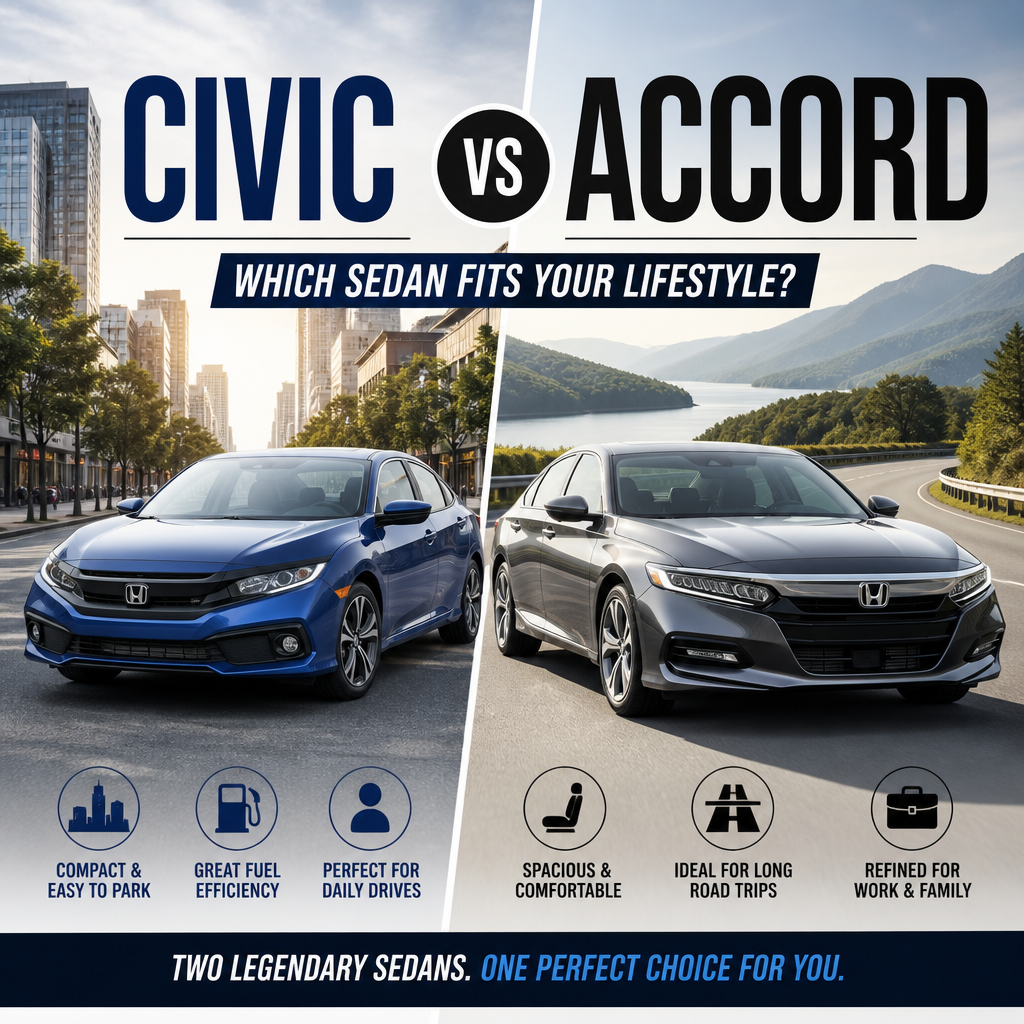
The Civic is compact, efficient, and easy to maneuver, while the Accord provides more space, power, and long-distance comfort. Understanding their key differences can help you select the sedan that best matches your daily routine and priorities.
Size and Interior Space
The Honda Civic is a compact sedan, making it especially convenient for city driving and tight parking spaces. Its interior feels modern and well organized, with enough room for most passengers and a practical trunk for everyday errands.
The Honda Accord is larger in nearly every dimension. That extra size creates a more spacious cabin, particularly for rear-seat passengers. Adults who regularly ride in the back will likely appreciate the Accord’s additional legroom and wider seating area.
Choose the Civic if you value easy maneuverability and a smaller footprint. The Accord is a better fit for families, frequent passengers, or anyone who wants a more open and relaxing interior.
Performance and Driving Experience
Both models deliver a smooth and confident driving experience, but the Accord generally feels more powerful and composed at highway speeds. Its larger platform provides a stable ride, making it a strong choice for road trips and long commutes.
The Civic feels lighter and more agile. It responds quickly in city traffic and offers an engaging driving experience without being difficult to operate. Depending on the trim, both sedans may offer turbocharged or hybrid powertrains, giving shoppers options for efficiency and performance.
The Civic may appeal more to drivers who enjoy nimble handling. The Accord is better suited to those who prioritize effortless acceleration, highway comfort, and a more substantial ride.
Fuel Economy and Efficiency
Fuel efficiency is one of the strengths shared by the Civic and Accord. Exact mileage varies by engine, trim, transmission, and drivetrain, but both can help reduce fuel costs compared with larger SUVs or trucks.
The Civic’s smaller size and lighter weight can make it especially economical for daily commuting. Hybrid versions of either model can provide even greater efficiency, particularly in stop-and-go traffic.
When comparing specific vehicles, review the official fuel-economy ratings rather than assuming one model will always be more efficient. A well-equipped Accord hybrid, for example, may deliver excellent mileage while offering more passenger and cargo space than a similarly efficient compact sedan.
Technology and Comfort
The Civic and Accord both feature modern infotainment systems, smartphone connectivity, available wireless charging, and a variety of driver-assistance technologies. Standard safety features commonly include forward collision warning, automatic emergency braking, lane-keeping assistance, and adaptive cruise control.
The Accord’s larger cabin often gives it a more upscale and relaxed atmosphere. Higher trims may include upgraded upholstery, premium audio systems, heated seating, and additional convenience features.
The Civic still offers a comfortable and attractive interior, especially in well-equipped trims. Its controls are straightforward, and its smaller cabin can feel cozy rather than cramped.
Ownership Costs and Practicality
The Honda Civic typically has a lower starting price than the Accord, making it an appealing option for budget-conscious buyers. Its compact dimensions can also reduce everyday stress in crowded urban areas.
The Accord costs more, but the additional investment provides a larger interior, more trunk capacity, and a generally more refined driving experience. For drivers who spend many hours behind the wheel or frequently transport passengers, those benefits may justify the higher price.
Both models are known for dependable ownership and strong resale values. Regular maintenance, insurance rates, financing terms, and trim selection should all be considered when calculating the total cost of ownership.
Which Honda Sedan Is Right for You?
The Honda Civic may be the better choice if you:
- Primarily drive in the city
- Want a lower purchase price
- Prefer a compact, agile sedan
- Usually carry one or two passengers
- Place a high priority on fuel efficiency
The Honda Accord may be the better choice if you:
- Frequently travel on highways
- Need generous rear-seat space
- Carry passengers or family members often
- Want a smoother, more powerful driving experience
- Prefer a larger and more comfortable cabin
Final Thoughts
The Honda Civic vs. Honda Accord comparison ultimately comes down to size, budget, and lifestyle. The Civic is practical, efficient, and easy to handle, making it a smart choice for commuters and urban drivers. The Accord offers more room, comfort, and highway confidence, making it better suited to families and frequent travelers.
Both sedans deliver the qualities Honda is known for, so the best choice depends on how you plan to use your car every day. Examine your passenger needs, driving habits, budget, and preferred features before making a decision.